Preventing Intraoperative Pressure Injuries in the Operating Room: A Quick Reference Guide
Advanced Strategies for the Surgical Phase of Care
In Part 1 of this three-part series, we examined the financial and clinical burden of Hospital-Acquired Pressure Injuries (HAPIs) across U.S. hospitals. Part 2 now shifts exclusively to the operating room (OR), a unique, high-risk environment where immobility, anesthesia, temperature shifts, and complex positioning dramatically increase the risk of pressure injuries.
To ensure these critical insights are immediately actionable for busy surgical teams, we have organized this guide into a concise, scannable format designed for quick reference in high-pressure clinical environments.
Intraoperative pressure injuries remain a costly and preventable harm. Surgery-related pressure injuries can increase hospital costs by up to 44%, according to a landmark study by Spector and colleagues.
Why the Operating Room Poses Unique Pressure Injury Risks
The operating room presents risk conditions not found in any other phase of care:
- Complete immobility under anesthesia
Patients lose the ability to move or relieve pressure. - High-pressure device interfaces
Frames, stirrups, arm boards, endotracheal ties, and headrests create localized, high-intensity pressure points. - Rigid operating surfaces
Operating room tables prioritize access and radiolucency, not pressure management. - Complex surgical positions
Prone, lateral, lithotomy, and Trendelenburg positions change biomechanical loading. - Long procedure times
Prolonged surgeries (>3 hours) exponentially increase deep tissue injury risk.
Literature consistently links these extrinsic risk factors to intraoperative pressure injury development.
Intraoperative Pressure Injuries Are Clinically Serious
Current data shows that patients with hospital-acquired pressure injuries (HAPIs) face substantially elevated mortality. A 2020 U.S. national discharge database study found a 13.1% in-hospital mortality rate among patients with HAPI. The study also revealed that the mortality percentage grew to 21.7% for Stage 4 injuries.
National estimates from 2012 reported 11.2% higher in-hospital mortality and 15.3% mortality within 30 days, but more recent data suggest mortality may be higher, especially for advanced-stage injuries.
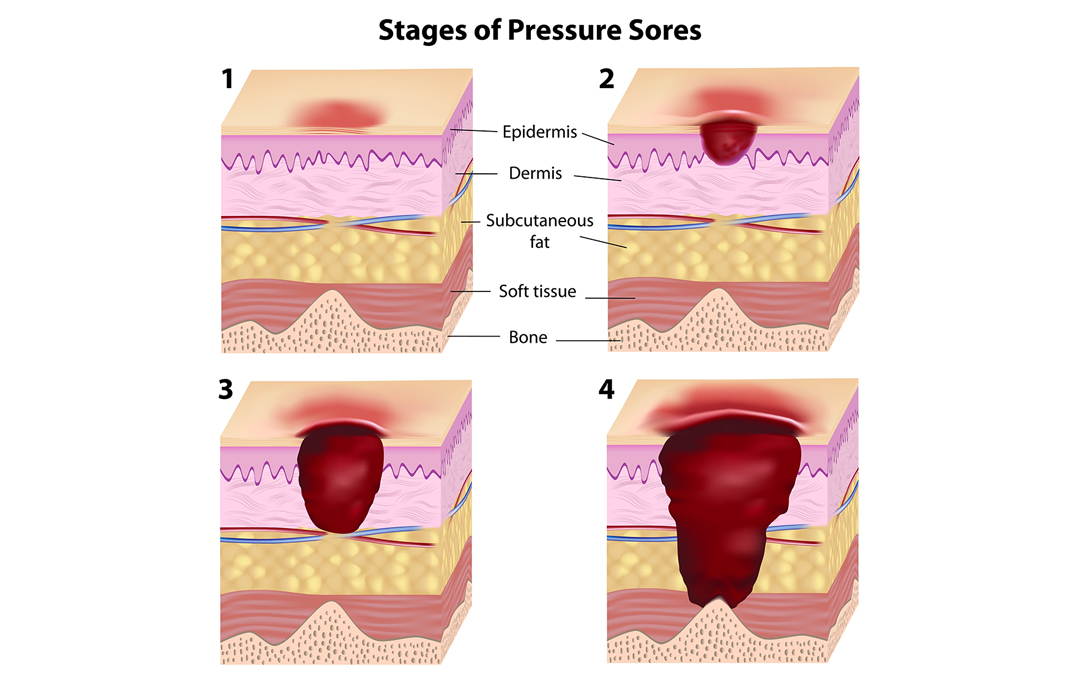
Many operating room related injuries are deep tissue injuries that develop beneath the surface and appear 48–72 hours later. This makes OR vigilance essential.
Operating room-Specific Pressure Injury Risk Factors
- Duration of Surgery
Experimental and clinical studies show that unrelieved pressure can reduce tissue perfusion within 30–60 minutes. Procedures lasting more than 90 minutes are consistently associated with significantly higher intraoperative pressure injury risk. - Surgical Positioning
Surgical Position / Primary Pressure Points (The “At-Risk” Zones)
Supine / Occiput (back of head), Sacrum, Heels
Prone / Face (eyes/ears), Chest/Breasts, Iliac Crest, Knees
Lithotomy / Sacrum, Heels, Fibular Head (nerve risk)
Lateral / Trochanter (hip), Shoulder, Malleolus (ankles)
Trendelenburg / Shoulders (if braced), Sacrum, Heels - Anesthesia Physiology
Anesthesia reduces blood flow and eliminates protective reflexes.
Evidence-Based Intraoperative Pressure Injury Prevention Strategies
1. Use a Perioperative-Specific Risk Assessment Tool
General tools like the Braden Scale are not validated for surgical patients.
Validated OR Risk Assessment tools include:
2. Optimize the operating room support surface
Use gel pads or viscoelastic overlays designed for surgical tables to redistribute pressure and reduce peak interface loading.
3. Precision Patient Positioning Key interventions:
- Offload bony prominences
- Check joint alignment
- Avoid nerve compression
- Ensure proper padding of elbows, heels, sacrum, and head
4. Micro-Movements Every 2–3 Hours
Small, safe micro adjustments, without breaking sterility can improve perfusion to mitigate extended surgical time.
5. Apply Silicone Border Dressings
Apply dressings to heels, sacrum, trochanters, and facial pressure points for prone , lithotomy and supine cases.
6. Device & Tubing Management
Nothing should rest beneath the patient. Even small cords cause deep injury under prolonged pressure.
7. Continuous Surveillance During the Case
The circulating nurse should:
- Reassess positioning
- Check pressure points
- Confirm warming device placement
- Document preventive actions
Team Communication: The Most Underutilized OR Intervention
Communication must be intentional, repetitive, and structured.
1. Time-Out
Include pressure injury risk and prevention steps in the scripted time-out.
2. The Intraoperative Pause
At the 2- or 3- hour mark, the team should:
- Verify padding
- Reassess alignment
- Evaluate temperature and moisture
- Shift micro-positioning if safe
The Debrief for Patient Safety
Revisit what was effective or needs improvement.
The operating room is a powerful inflection point in the pressure injury story. Here, patients lose all natural protection. They cannot move, feel pain, or shift their weight. Every protective action depends on the surgical team.
Intraoperative pressure injuries are driven mainly by extrinsic factors. These include surfaces, positioning, anesthesia, devices, temperature, and time. The good news is that these factors are modifiable. When perioperative teams use validated risk tools, optimize surfaces, and micro-movements during long cases, pressure injury can be significantly reduced.
Communication is the thread that connects each action. When risk, positioning, and prevention plans are reported during the time-out, skin safety becomes a shared responsibility, not an afterthought. The operating room is pivotal for preventable PI’s and in part 3, we’ll focus on protecting skin from PACU through inpatient recovery.
Our proprietary Akton® polymer reduces the risk of pressure injuries
The ultrasoft polymer combined with the soft, flexible surface of our pads allows the product to move with the patient, reducing negative effects of shear on fragile skin. In addition, the Akton® polymer distributes weight and dissipates heat; reducing the risk of high-pressure points and hot spot development that can lead to pressure injuries. These combined benefits enhance patient protection.
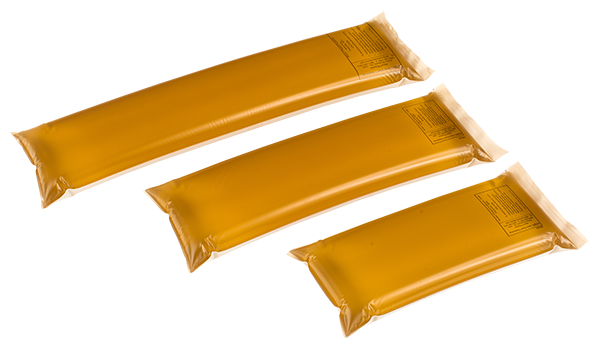
Action® Patient Positioners
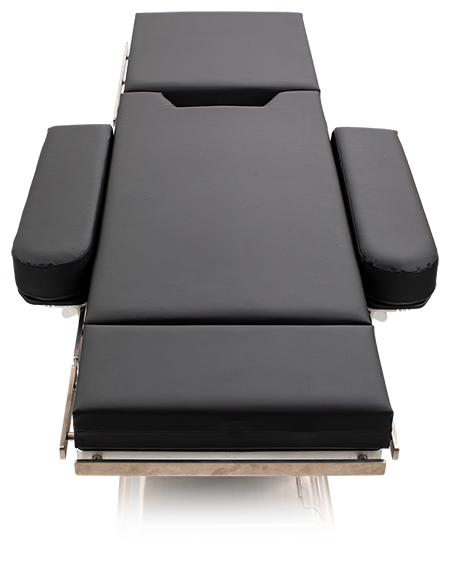
Action® Performance Series Table Pads
Head-to-toe pressure management, great for extended cases and high turnover OR’s
B9055-000