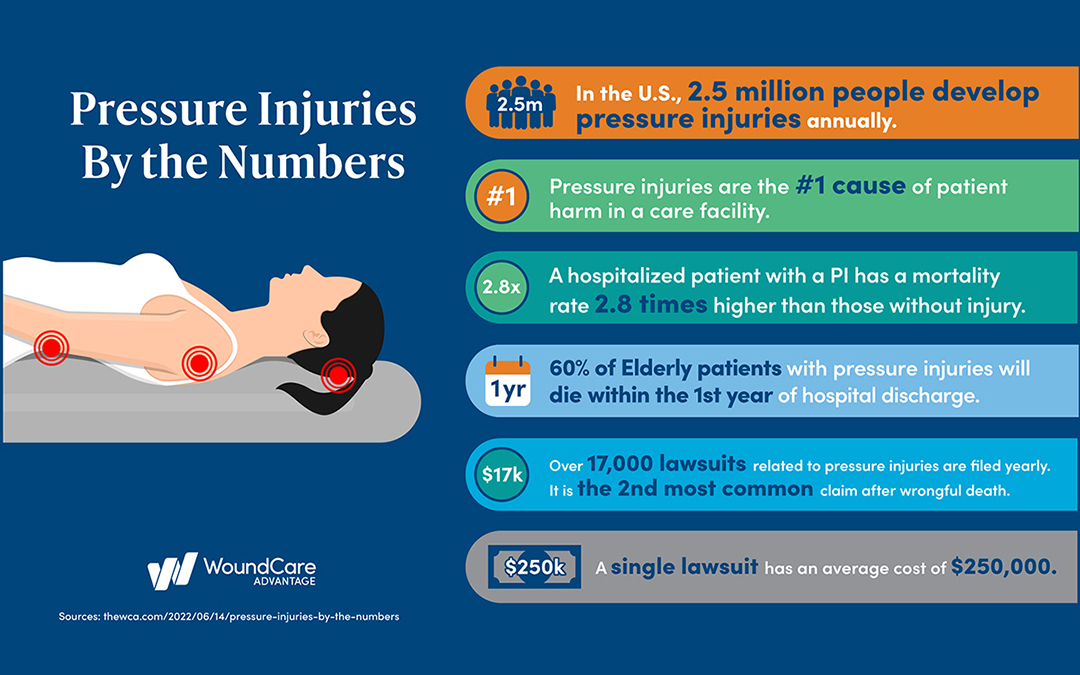
Image Credit: WoundCare Advantage
Pressure injuries increase morbidity and mortality rates and about 60,000 patient deaths per year are a direct result of pressure injuries. The costs for U.S. hospital-acquired pressure injuries (HAPI) in the United States may exceed $26.8 billion. About 59% of these costs are disproportionately attributable to a small rate of Stages 3 and 4 full‐thickness wounds, which occupy clinician time and hospital resources. While there have been declines in many hospital-acquired conditions, HAPIs have risen by 6%. A 2022 study found that the prevalence of HAPIs in critical care units was 5.85%.
Health and Financial Toll of Hospital-Acquired Pressure Injuries
The mortality of patients who develop a pressure injury is 9.1% in comparison to 1.8% for patients who do not develop a pressure injury. In addition, the length of stay for a patient who develops a pressure injury, on average, is prolonged 4 to 6 days more than the patient without a pressure injury, increasing the cost of hospitalization approximately $50,000 to $60,000 per admission.
Upon discharge, 76.9% of patients with pressure injuries require transfer to subacute care facilities or home with home care services, further adding to the cost of healthcare. Medical device–related pressure injuries (MDRPIs) are iatrogenic and account for more than 30% of all hospital-acquired pressure injuries.
Hospital-acquired pressure injuries are Increasing
New data shows a 910,000 (about 13 percent) reduction in hospital-acquired conditions between 2014 to 2017, helped prevent 20,500 U.S. hospital deaths and saved $7.7 billion in healthcare costs. Within that positive news, one area, pressure injuries, which are classified as “never events” continues to exact an exorbitant cost on the budgets of healthcare providers. The same AHRQ report shows that the rate of pressure injuries actually increased by six percent during the same time period as the rates of other hospital acquired conditions were declining.
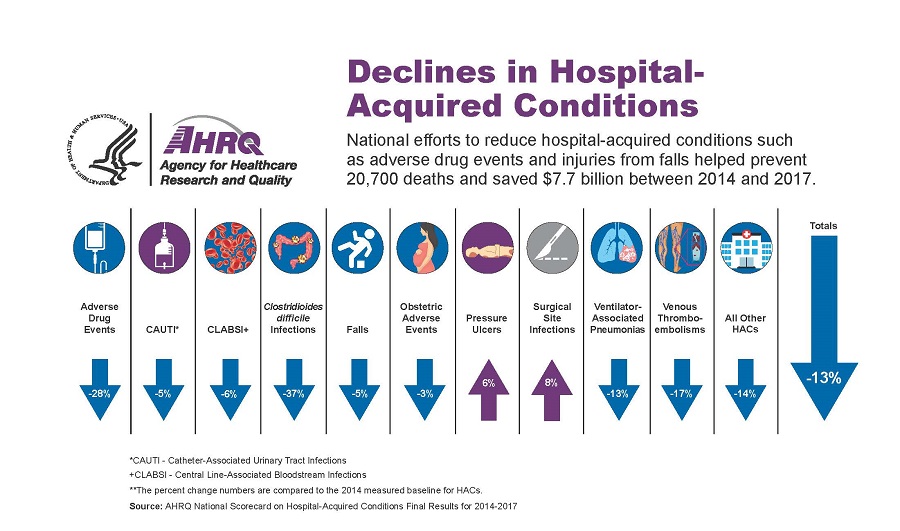
Image Source: https://www.ahrq.gov/data/infographics/hac-rates_2019.html
Analysis using EHR data maintains that pressure injury prevention strategies for all inpatients are cost-effective. One HAPI prevention method is having a support surface that provides adequate pressure redistribution by having the lowest interface pressures (i.e., the pressure load between the skin and the support surface), lowest peak interface pressure, and the highest skin contact area.
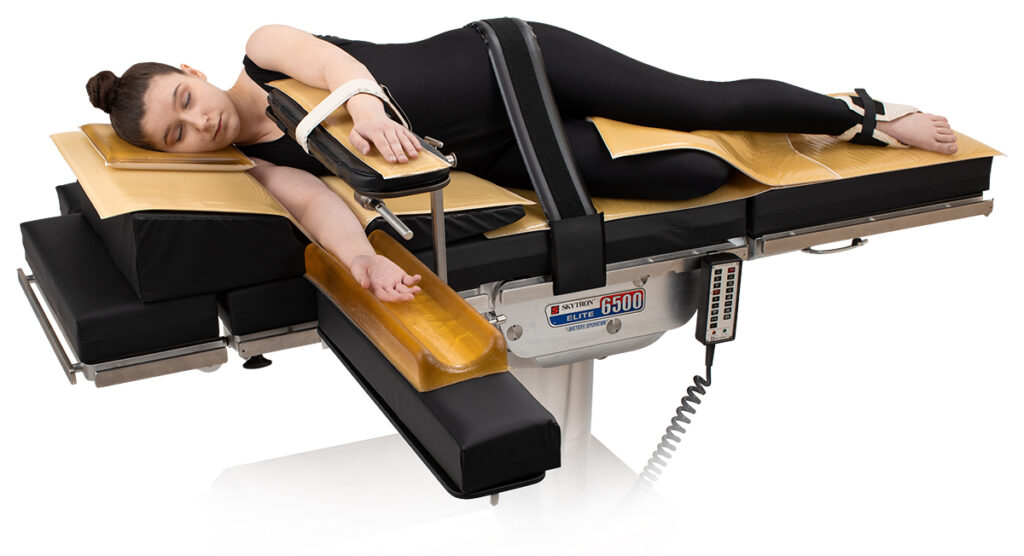
Reactive gel surfaces may reduce pressure injury risk
Compared to foam surfaces, reactive gel surfaces may reduce pressure injury risk, particularly for people in operating rooms, and is a cost-effective intervention.
In a non-experimental study conducted in a university medical center in Canada, Pham et al calculated the cost of using the existing OR bed mattress and supplemental padding compared with the cost of using a viscoelastic dry polymer gel overlay on top of the OR bed mattress. The researchers found that the use of the viscoelastic gel overlay during procedures lasting 90 minutes or longer decreased the incidence of postoperative PI by 0.51% and resulted in an overall cost savings of $45.76 per patient ($59.34 in 2022 US dollars). According to data published in Nursing Economics and other journals, the treatment cost for pressure injuries is 2.5 times the cost of prevention.
Implement early interventions
Not implementing early interventions and delaying preventative care for surgical patients will add to the increase in hospital-acquired pressure injuries. As poor outcomes associated with pressure injuries continue to rise across the globe, so will the cost to healthcare facilities.
While HAPI prevention may seem costly at the front-end, in the long run it will save resources and patient suffering. Take action now, use pressure injury prevention strategies that protect patients and resources from high costs.

Action® Overlays
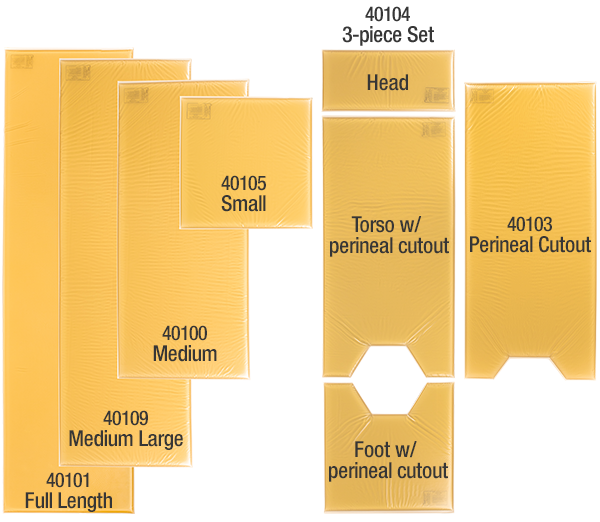
The Action® O.R. Overlay is a versatile polymer pad used for a wide range of procedures. Its shear reducing qualities combined with the ability to distribute heat and pressure make it a valuable pressure management tool.
Resources
https://www.ahrq.gov/sites/default/files/publications/files/putoolkit.pdf
https://www.thewca.com/blog/pressure-injuries-by-the-numbers Pressure Injuries by the number, Kallie Christensen June 14, 2022
https://www.ahrq.gov/data/infographics/hac-rates_2019.html
https://pubmed.ncbi.nlm.nih.gov/27861135/
https://pubmed.ncbi.nlm.nih.gov/32868735/
https://pmc.ncbi.nlm.nih.gov/articles/PMC7722289/
B9041-001