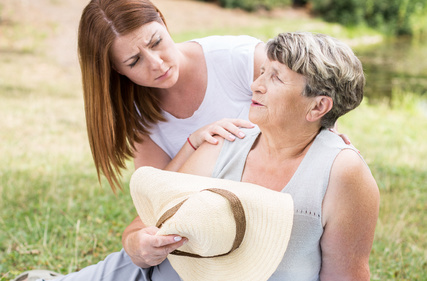
Managing heat and humidity in the summer is a priority for everyone; for older adult home healthcare patients, it’s a lifesaving necessity.

Every summer, healthinaging.org reports, nearly 200 Americans die of health problems caused by high heat and humidity; most are age 50 or older. Hot weather is more likely to cause health problems for older adults, the authors explain, for a variety of reasons, including:

  • age-related body changes
  • chronic health conditions
  • side effects of medications

When temperatures are above 90◦, older adults are advised to:

  • stay out of the sun
  • spend as much time as possible in air-conditioned surroundings
  • stay hydrated
  • dress in light-colored, light-weight clothes
  • take tepid showers, baths, or sponge baths

Health problems caused by too much heat, the authors caution, include:

  • weakness
  • headache
  • muscle cramps
  • dizziness
  • confusion
  • passing out

Heat stroke is signaled by a very dangerous, potentially deadly rise in body temperature (103 degrees or higher) with dry skin, rapid pulse, nausea or vomiting and confusion. These symptoms should prompt a call to 911, healthimaging.org urges.

At Action Products, where we provide home medical products, we know that summer is a particularly dangerous time for immobilized patients. Users of our Akton® viscoelastic polymer products, designed to prevent and manage pressure injuries, are often older adults who are being cared for in their own homes.

For older adults, managing heat and humidity during the summer is a lifesaving necessity. Action products, which never leak or bottom out, are specially designed to help older home healthcare patients handle the heat.

Read More Action Product Blogs…

Pressure Injuries: Never Events – Part 1

Preventing Hospital-Acquired Pressure Injuries in 2026: Perioperative Strategies to Avoid CMS Never Events Hospital-Acquired Pressure Injuries (HAPIs) remain a costly and preventable harm. The Centers for Medicare & Medicaid Services (CMS) still classifies Stage...

Heel Pressure Injury Prevention with Evidence-Based Interventions!

Mitigate the risk of a heel pressure injury The supine position is the most common surgical position with the patient lying on their back with the head, neck and spine in a neutral position. This position is not without pressure injury risk as there is increased...

National Patient Safety Goals, Universal Protocol: Guideline for Perioperative Team Communication

Each year the Joint Commission, with input from practitioners, provider organizations, purchasers, consumer groups, and other stakeholders, determines high priority patient safety issues and creates National Patient Safety Goals (NPSG). NPSG were established in 2002...

November 20 is Pressure Injury Prevention Day!

The annual Worldwide Pressure Injury Prevention Day is November 20, 2025.  Don’t forget that perioperative pressure Injury prevention strategies decrease hospital acquired pressure injuries (HAPIs) in non-reimbursable CMS “never event” category. Awareness around...

Preventing Pressure Injuries Is Essential in Home Healthcare

For individuals with physical disabilities receiving care at home, preventing pressure injuries (also known as pressure ulcers or bedsores) is not just important, it’s critical to maintaining health, comfort, and independence. As Susan Lipton Garber noted in the...

Tips to Reduce Surgical Site Infections

Surgical site infections (SSI) are multifaceted, meaning that there are many intrinsic and extrinsic factors that contribute to them. Unfortunately, it is difficult to track down the source of infection because of all the factors in play. Is it the traffic in the OR...

Choosing the right-size Chest Roll

Chest Rolls for Prone Position: Assess Your Surgical Patient’s Needs Protecting your patient in the prone position requires assessing the patient’s needs for that surgery. In this blog we will talk about the correct positioning and different uses for the chest roll...

Pressure Injuries Can Affect Patients for a Lifetime

Hospital acquired pressure injuries (HAPI) can cause severe pain and even death to the patient. When HAPIs are discussed among healthcare managers, cost comes first to mind. However, there are other concerns healthcare workers should consider. First and foremost is...

Enhancing Patient Safety with Viscoelastic Gel Overlays in Surgical Positioning

Surgical nurses play a critical role in protecting patients from positioning-related pressure injuries during surgical  procedures. One of the most effective tools to support this mission is the viscoelastic gel overlay, a material designed to reduce pressure, enhance...

Take the Time for a “Time Out”

The “Time Out” The “time out” is one part of the Universal Protocol developed by the Joint Commission to prevent wrong-site, wrong-procedure, and wrong-person surgery. Each are considered never events by the National Quality Forum and sentinel events by the Joint...